Newport News, VA

Family Owned • Community Focused

Category: Mattress Guides

Buying guides for mattresses, foundations and sleep support from Lily’s Furniture and Mattress in Newport News, VA.

  • Memory Foam vs. Innerspring vs. Hybrid: Which Mattress Is Right for You?

    Memory Foam vs. Innerspring vs. Hybrid: Which Mattress Is Right for You?

    Three mattress types dominate almost every showroom floor: memory foam, innerspring, and hybrid. Each one genuinely suits a different sleeper.

    The trouble is that marketing describes all three as the most supportive, coolest and most comfortable option available. They cannot all be right.

    Here is what actually separates them, and how to match one to the way you sleep rather than to the way it is advertised.

    The Three Types Side by Side

    Memory foamInnerspringHybrid
    ConstructionSolid foam layersSteel coils with thin paddingCoil base plus foam comfort layers
    FeelSinks in and contoursFirm with noticeable bounceCushioned on top, supportive underneath
    Pressure reliefExcellentLimitedVery good
    Motion isolationBest availablePoor — you feel your partner moveGood, but not foam-level
    Sleeps cool?Warmest — foam traps heatCool — air moves through coilsCool — coils ventilate
    Edge supportWeakestGoodBest
    Typical priceMidLowestHighest

    Read that table by column and a pattern appears. Innerspring wins on price and airflow, memory foam wins on pressure relief and stillness, and hybrid trades a little of each to avoid any serious weakness.

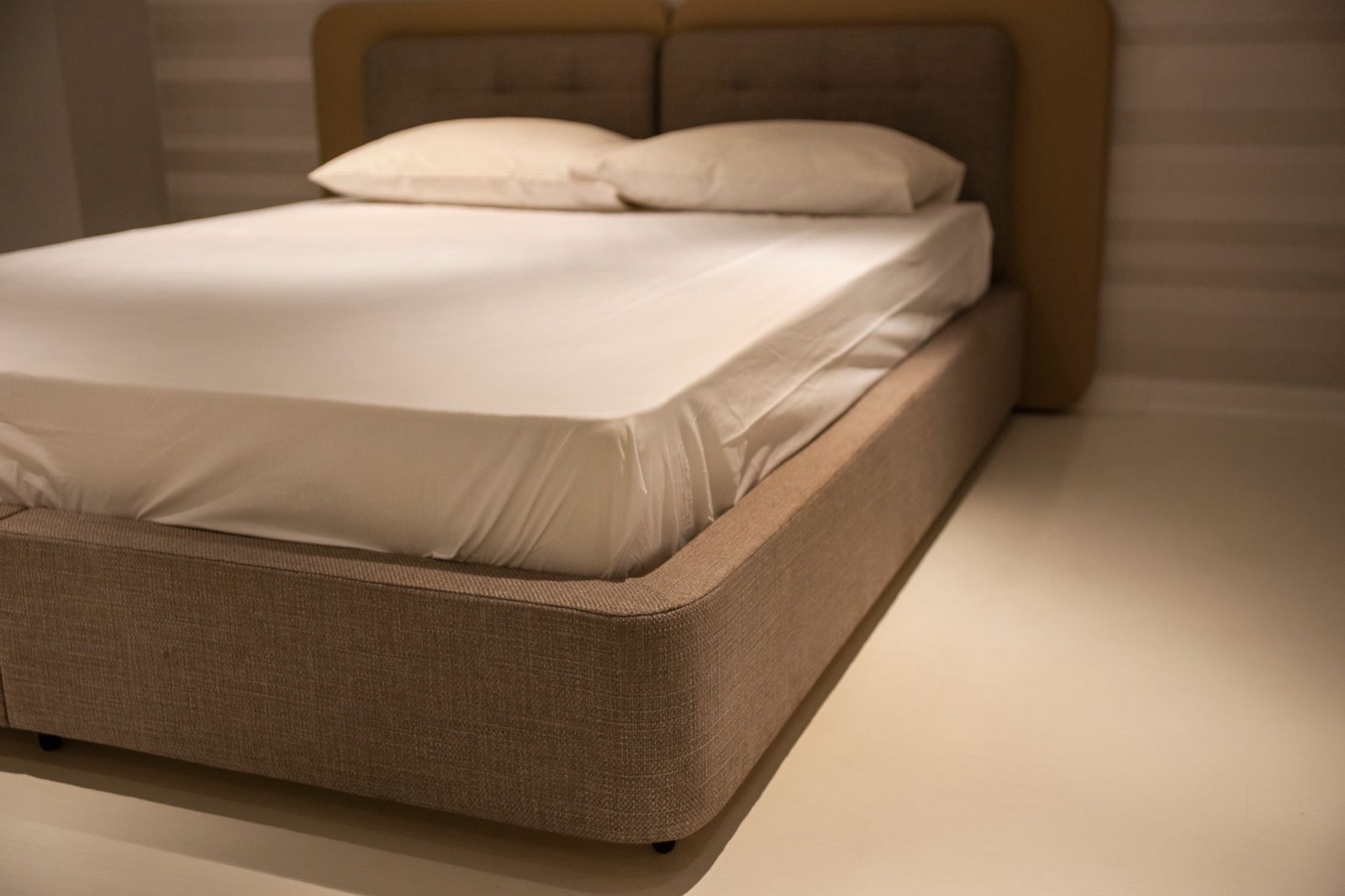
    Close-up of foam mattress layers showing the contouring comfort material

    Match the Mattress to Your Sleep Position

    Sleep position determines where your body needs to sink and where it needs holding up. It is the single most useful starting point.

    You sleep mostly on your…Firmness to look forBest typeWhy
    SideMedium-soft to medium (4–6 / 10)Memory foam or hybridShoulders and hips must sink or the spine bends
    BackMedium-firm (6–7 / 10)Hybrid or innerspringThe lower back needs filling in, not sinking
    FrontFirm (7–8 / 10)Innerspring or firm hybridA soft surface lets the hips drop and arches the back
    CombinationMedium (5–6 / 10)HybridBounce makes changing position easier than deep foam

    Body weight shifts these numbers. Heavier sleepers generally want one step firmer than the table suggests; lighter sleepers one step softer, because they do not compress the comfort layer as much.

    Choosing by Your Biggest Complaint

    Most people are not shopping in the abstract. They are solving a specific problem.

    Your main issueBest choiceWhat to avoid
    “I overheat at night”Innerspring or hybridDense all-foam without cooling layers
    “My partner wakes me up”Memory foamTraditional innerspring
    “My hips and shoulders ache”Memory foam or soft hybridFirm innerspring
    “My lower back hurts”Medium-firm hybridAnything very soft
    “I need to keep costs down”InnerspringPremium hybrids
    “I sit on the edge of the bed”HybridAll-foam — edges collapse
    “We’re different weights”Hybrid with zoned coilsSoft all-foam
    Side sleeper resting on a mattress that allows shoulders and hips to sink for spinal alignment

    Understanding the Firmness Scale

    Firmness is rated one to ten across the industry, but manufacturers apply it loosely. Use it as a guide, not a specification.

    RatingDescriptionTypically suits
    3–4Soft — deep contouringLightweight side sleepers
    5–6Medium — the most popular rangeSide and combination sleepers
    6–7Medium-firmBack sleepers; most couples
    8–9Firm — minimal sinkFront sleepers; heavier sleepers

    A “medium-firm” from one brand can feel like another brand’s “medium”. This is exactly why lying on the mattress beats reading the label.

    What About Durability?

    • Innerspring — typically the shortest life; coils lose tension and sag where you sleep most
    • Memory foam — good lifespan, but softens gradually and can develop body impressions
    • Hybrid — generally the longest-lasting, as the coil unit carries the load rather than the foam

    Support underneath matters more than most shoppers expect. Any of these types will fail early on a sagging base, which is why manufacturers specify the foundation in the warranty.

    All-foam mattresses in particular need a solid, continuous surface — our guide to whether your bed needs a bunkie board explains the slat-gap test that decides it.

    Reading the warranty before you buy

    Mattress warranties sound generous at ten or twenty years, but they cover manufacturing defects rather than normal softening.

    The clause that matters is the sagging threshold. Most warranties only pay out once an unweighted impression exceeds a stated depth, commonly around an inch and a half. Anything shallower counts as ordinary wear, however uncomfortable it feels.

    Two other conditions catch people out regularly: the base must meet the manufacturer’s specification, and removing the law tag can void the claim entirely. Photograph the tag and keep your receipt somewhere you will actually find it in five years.

    Couple sharing a bed, the situation where motion isolation matters most

    How to Test One Properly in a Store

    1. Lie in your actual sleeping position, not on your back out of politeness.
    2. Stay there at least ten minutes — first impressions of firmness are usually wrong.
    3. Slide a hand into the small of your back. A large gap means too firm; no gap and sinking means too soft.
    4. Roll over twice. If it takes effort, the mattress is too soft for a combination sleeper.
    5. Sit on the edge to check whether it holds or collapses.
    6. If you share a bed, test it together — motion transfer only shows up with two people.

    Sleep quality has measurable effects on health, and the National Heart, Lung, and Blood Institute’s research on sleep deprivation is a useful reminder that this is not just a comfort purchase.
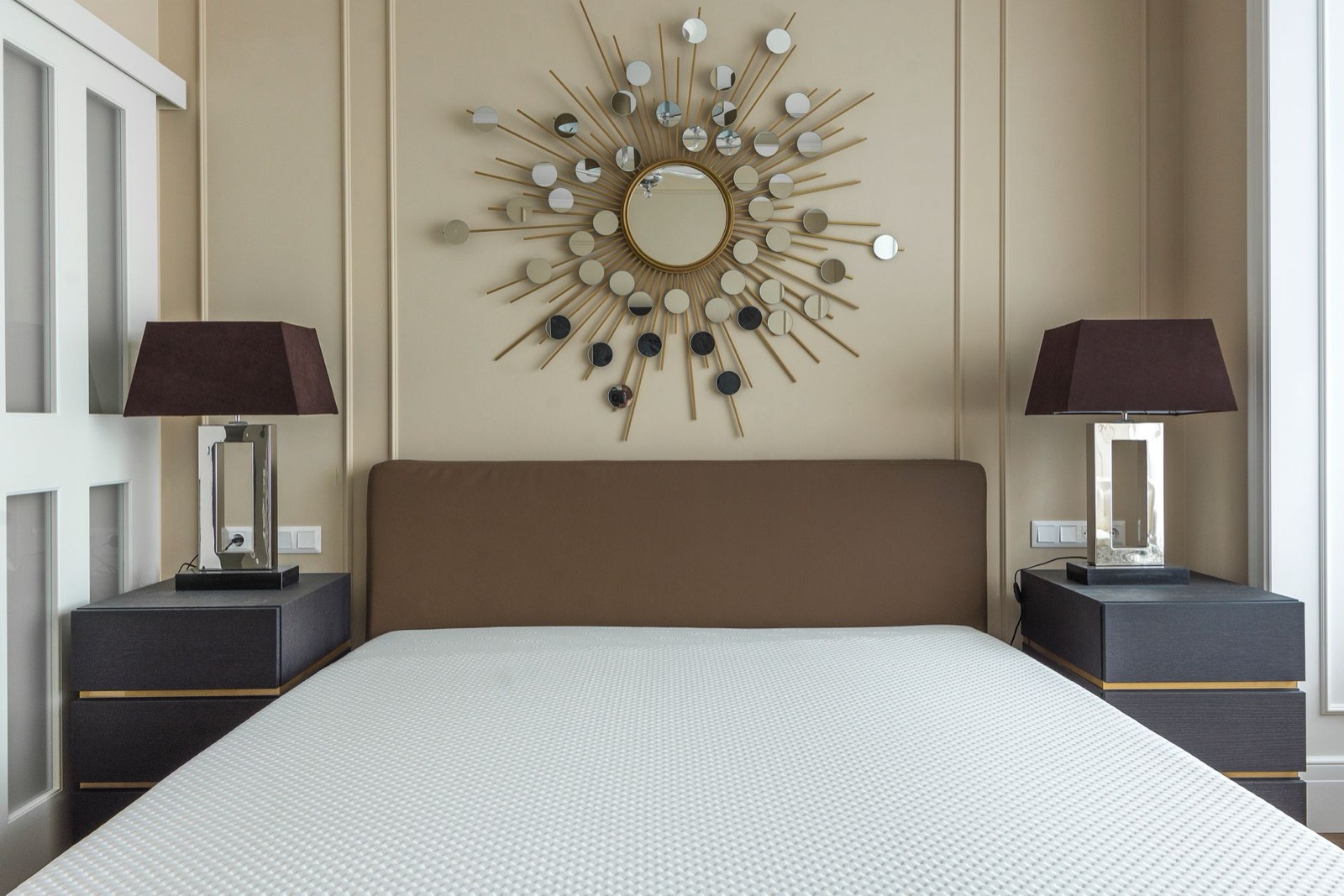
    Shopper testing mattress firmness by lying down in a furniture showroom

    Frequently Asked Questions

    Which mattress type lasts the longest?

    Hybrids generally last longest, because the coil unit carries the structural load and the foam is only a comfort layer. Traditional innersprings usually wear out first.

    Do memory foam mattresses really sleep hot?

    Dense traditional foam does trap heat. Modern gel-infused and open-cell foams reduce it considerably, but if running hot is your main complaint, a hybrid’s coil layer moves air far more effectively.

    Is a hybrid worth the extra cost?

    If you sleep hot, share the bed with someone of a different weight, or sit on the edge regularly, yes. If you sleep alone, cool and still, a good memory foam or innerspring will serve you just as well for less.

    What firmness is best for back pain?

    Medium-firm, around 6 to 7 out of 10, suits most people with lower back pain. Very soft mattresses let the hips drop out of alignment; very firm ones leave the lumbar curve unsupported.

    How long should a mattress last?

    Roughly seven to ten years for most types, assuming adequate support underneath. Visible sagging, waking up stiff, or sleeping better away from home are the usual signs it is time.
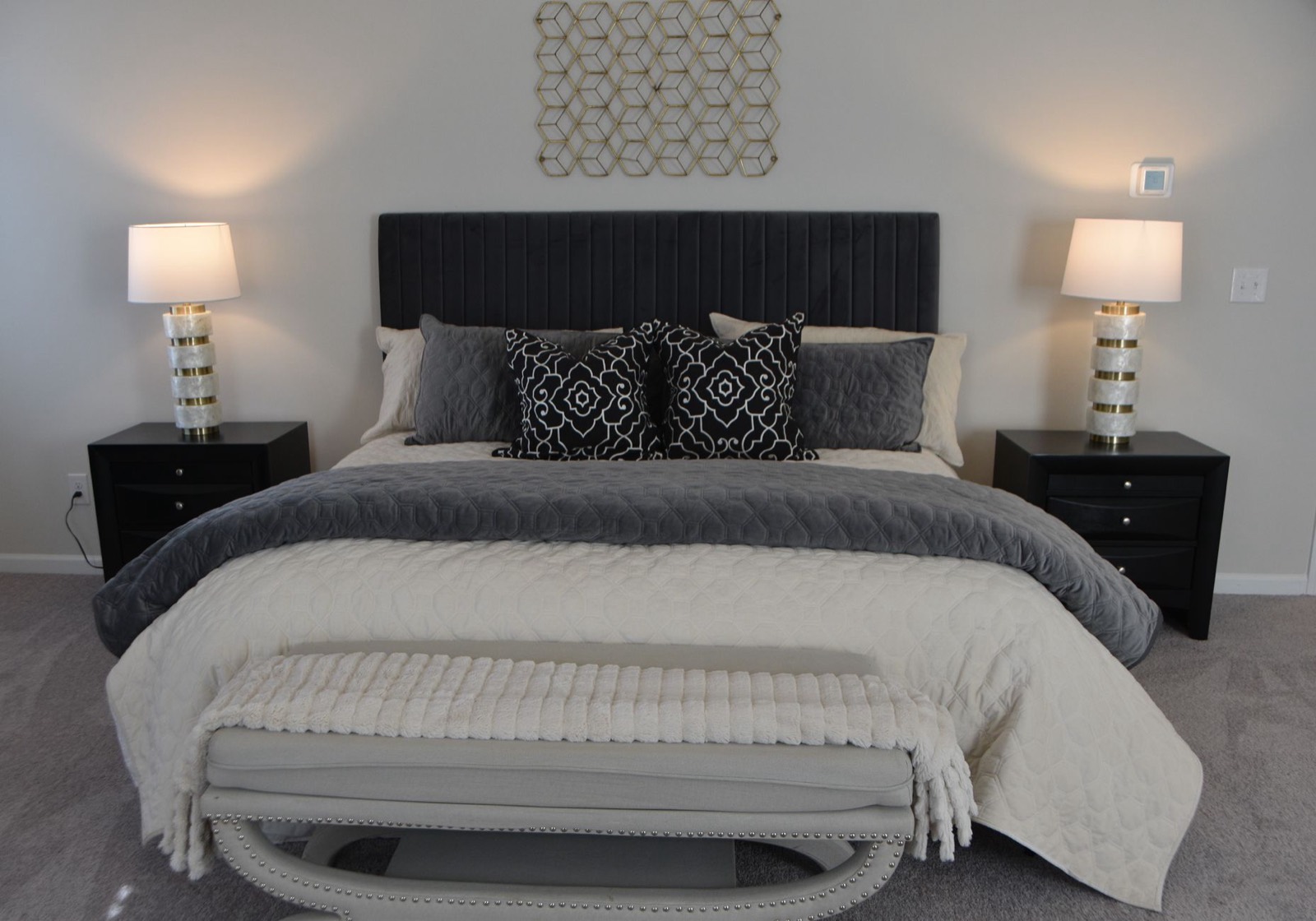
    Complete bedroom setup with mattress and frame showing how support underneath affects durability

    Compare Them in Person

    No amount of specification reading substitutes for ten minutes lying down. The difference between foam and hybrid is obvious within seconds of trying both back to back.

    All three constructions are on the floor at our mattress showroom in Newport News, including Serta and Corsicana ranges — see the full list of mattress and furniture brands we carry.

    Before you settle on a model, check you have the right size using our mattress size chart from twin to California king, and browse bedroom furniture and bed frames to see the complete setup.

    Watch clearance and specials for discounted mattress sets, spread the cost with our no-credit furniture financing options in Virginia, and use the free home delivery service rather than folding a hybrid into a car.

    Not sure which type suits how you sleep? Tell our Newport News team your sleep position and main complaint and we will point you at the right two or three to try.


  • Mattress Sizes Explained: Twin to California King

    Mattress Sizes Explained: Twin to California King

    Mattress names are not descriptive. “Full” is not full-size for two adults, a King is wider than a California King, and a Twin XL is longer than a Full.

    Most people choose a size based on what they grew up with, then discover the room cannot take it or the bed is too short. Both mistakes are avoidable with two numbers: the mattress dimensions, and the floor space the room actually has.

    Here is every standard US size, what each one genuinely suits, and the minimum room it needs.

    The Complete Mattress Size Chart

    SizeDimensions (W × L)Minimum room sizeBest suited to
    Twin38″ × 75″7 × 10 ftChildren, bunk beds, single sleepers in small rooms
    Twin XL38″ × 80″7 × 10 ftTaller teens and adults; standard dorm size
    Full54″ × 75″9 × 10 ftOne adult who likes space; guest rooms
    Full XL54″ × 80″9 × 10 ftTaller single sleepers; less commonly stocked
    Queen60″ × 80″10 × 10 ftCouples; the most popular size in the US
    King76″ × 80″12 × 10 ftCouples wanting maximum width; families who co-sleep
    California King72″ × 84″12 × 12 ftSleepers over 6 ft who need the extra length

    Those room minimums assume you want to walk around three sides of the bed and open a wardrobe. Squeeze below them and the room works, but it stops feeling like a bedroom.

    Tape measure used to check bedroom floor space before choosing a mattress size

    King vs California King: The Most Common Mix-Up

    Almost everyone assumes California King is the bigger bed. It is not — it is narrower, and only gains you length.

    Standard KingCalifornia King
    Width76″72″ — four inches narrower
    Length80″84″ — four inches longer
    Total surface area6,080 sq in6,048 sq in — very slightly smaller
    Width per person (couple)38″ each36″ each
    Choose it whenYou want maximum shoulder roomSomeone in the bed is over 6 ft tall
    Room shape that suits itWide roomsLong, narrow rooms

    The rule is simple. Height problem, buy California King. Space problem, buy King.

    How Much Room Does Each Person Actually Get?

    This is the number that decides whether a couple sleeps well, and almost nobody checks it before buying.

    Size shared by two adultsWidth eachComparison
    Full27″Narrower than a standard crib mattress
    Queen30″Workable, but tight for restless sleepers
    California King36″Nearly a Twin each
    King38″Exactly a Twin each — the most personal space available

    A Full shared by two adults gives each person less width than a baby’s cot. It is fine occasionally in a guest room; it is a poor long-term choice for a couple.

    Couple sharing a large bed, showing why width per person matters when choosing king or California king

    Length: The Check People Forget

    Most mattresses are 75 or 80 inches long. Six foot is 72 inches, so a 75-inch mattress leaves a six-foot sleeper just three inches of clearance.

    • Under 5 ft 10 in — any length works comfortably
    • 5 ft 10 in to 6 ft 2 in — choose an 80-inch mattress: Twin XL, Queen or King
    • Over 6 ft 2 in — California King, at 84 inches, is the only standard size with real margin

    Add a few inches if you sleep on your front with your feet hanging off, or if a footboard eats into the usable length.

    Sizing for Children and Bunk Beds

    Age or stageSensible sizeReasoning
    Toddler to about 8TwinCheapest to replace as tastes change; fits any small room
    TeenagerTwin XL or FullGrowth spurts make 75 inches short quickly
    Bunk bedsTwin (occasionally Full on the lower bunk)Frames are built to these dimensions; nothing else fits safely
    Shared kids’ roomTwo Twins or a Twin bunkLeaves usable floor space for play

    Bunk beds are the one case where size is not really a choice. The frame dictates it, and using a mattress that does not match the frame is a genuine safety issue.

    Bunks also need thin mattresses and a solid base beneath them — our guide to what a bunkie board is and whether your bed needs one covers the support side in detail.

    Twin bed in a child's bedroom, the standard size for kids rooms and bunk frames

    Measuring Your Room Properly

    1. Measure the wall where the headboard will sit, corner to corner.
    2. Measure the opposite direction, accounting for any door swing.
    3. Mark the mattress footprint on the floor with masking tape.
    4. Walk the perimeter — you want at least 24 inches of clearance on any side you use.
    5. Check the route in: doorways, stair turns and low ceilings sink more deliveries than room size does.

    The tape trick takes five minutes and prevents the single most common furniture regret there is.

    Remember the bed frame adds to the mattress footprint. A queen frame with a chunky surround can be four to six inches wider and longer than the mattress itself.

    Wooden bed frame and headboard showing how a frame adds to the mattress footprint

    Frequently Asked Questions

    What is the most popular mattress size?

    Queen, by a wide margin. At 60 by 80 inches it fits a 10 by 10 foot room, suits most couples, and has the broadest choice of frames and bedding.

    Is a California King bigger than a King?

    No. A California King is four inches narrower and four inches longer, and its total surface area is fractionally smaller. Choose it for length, not for size.

    Can two adults sleep comfortably on a Full?

    For a night or two, yes. Long term it is cramped — each person gets 27 inches of width, which is less than a Twin mattress split in half would suggest. A Queen is the practical minimum for couples.

    Do Twin XL sheets fit a Twin?

    Not well. Twin XL is five inches longer, so fitted sheets will be loose at the corners. Two Twin XL mattresses side by side do, however, make up exactly a King.

    What size mattress fits a bunk bed?

    Twin in almost every case, with some frames taking a Full on the lower bunk. Always match the manufacturer’s specification, and keep to the maximum mattress thickness stated for the top bunk.

    Mattresses displayed side by side in a showroom so shoppers can compare sizes in person

    Try the Size Before You Commit

    Dimensions on a chart tell you whether a bed fits the room. Only lying on one tells you whether it fits you — and ten minutes in a showroom settles the Queen-versus-King question faster than any amount of reading.

    Every size above is on the floor at our mattress showroom in Newport News, with matching bedroom furniture and bed frames alongside so you can see the true footprint rather than just the mattress.

    Sizing a child’s room? Our kids furniture and bunk bed range is built around Twin dimensions. Spreading the cost is straightforward too — see the guide to buying furniture with no credit in Virginia or our financing and payment plans.

    Upgrading to a King often means the old frame no longer works — check clearance and specials for frames, and our free home delivery service for getting an 80-inch mattress home in one piece.

    For wider context on how size affects sleep quality, the Sleep Foundation’s mattress research library is a solid independent starting point. Still undecided? Send our Newport News team your room measurements and we will tell you what will genuinely fit.

  • What Is a Bunkie Board? (And Do You Need One?)

    What Is a Bunkie Board? (And Do You Need One?)

    If a salesperson has ever told you that you need “a bunkie board,” you would be forgiven for assuming it was an upsell. It usually isn’t.

    A bunkie board is one of the cheapest pieces of bedroom hardware you can buy. On the wrong bed frame, it is the difference between a mattress that lasts a decade and one that develops a valley down the middle in two years.

    Here is what a bunkie board does, how to tell whether your bed needs one, and which size and thickness to buy.

    What Is a Bunkie Board?

    A bunkie board is a thin, rigid panel that sits between your mattress and whatever is holding it up. Most are 1 to 3 inches thick.

    They are built from plywood, particleboard, or tightly spaced wooden slats, and usually wrapped in fabric so the edges look finished. The job is simple: turn an uneven or gappy surface into one flat, continuous plane of support.

    The name comes from bunk beds. A bunk frame has no room for a bulky box spring, so manufacturers used a thin board instead — an idea that dates back to the early twentieth century. The name stuck, even though bunkie boards now show up under platform beds, daybeds, trundles, and adjustable bases.

    Close-up of wooden bed frame slats showing the gaps that determine whether a bunkie board is needed

    Bunkie Board vs. Box Spring vs. Foundation vs. Slats

    These four terms get used interchangeably on the sales floor. They are not the same thing, and swapping one for another is where most mattress support problems start.

    Support typeTypical heightTypical weightBest suited toFlexes or bounces?
    Bunkie board1–3 in~30 lbFoam, latex and hybrid mattresses; platform, bunk and daybed framesNo — rigid by design
    Box spring~9 in~100 lbTraditional innerspring mattresses on a metal frameYes — coils absorb shock
    Foundation5–9 in50–70 lbInnerspring and hybrid; when you want the bed to sit higherMinimal
    Bare slatsPart of the frameMattresses specifically rated for a slatted baseSlight flex between slats

    The critical distinction is the last column. A box spring is designed to give a little and absorb shock. A bunkie board is designed to do the opposite — stay rigid and never flex.

    Do You Need a Bunkie Board? Use the Slat Gap Test

    Take a tape measure to the gap between the slats on your bed frame. That single measurement answers the question most of the time.

    Your current setupDo you need one?Reason
    Platform bed, slats more than 3 in apartYesFoam sags into the gaps; many warranties require solid support
    Memory foam or latex mattress on any slatted baseUsuallyFoam has no internal structure and needs continuous backing
    Bunk bed, daybed or trundleYesNo vertical clearance for a box spring or foundation
    Slats less than 2.75 in apart, mattress sleeping fineNoExisting support is already adequate
    Solid platform deck with no gapsNoRedundant — you already have a flat plane
    Innerspring mattress on a metal bed frameNoUse a box spring instead; the mattress is built to work with one
    Memory foam mattress that requires a solid, continuous foundation rather than widely spaced slats

    Signs your mattress is asking for one

    • A dip or valley forming down the centre of the bed
    • You can feel individual slats through the mattress
    • The mattress creaks, shifts or slides when you move
    • Sagging appeared within the first couple of years
    • Your mattress paperwork specifies a “solid” or “continuous” base

    That last point matters. Inadequate support is a common reason a warranty claim gets denied, and Consumer Reports’ mattress guidance stresses that the base underneath affects how a mattress performs over time. A board costing under a hundred dollars protects a mattress costing many times that.

    Bunkie Board Sizes and Dimensions

    Buy to match your mattress size, not your frame. Standard dimensions are consistent across manufacturers.

    SizeDimensions (W × L)Commonly used for
    Twin38″ × 75″Bunk beds, kids’ rooms, daybeds
    Twin XL38″ × 80″Taller teens, dorm-style frames
    Full54″ × 75″Guest rooms, smaller bedrooms
    Full XL54″ × 80″Less common; check before ordering
    Queen60″ × 80″The most common master bedroom size
    King76″ × 80″Often sold as two twin-XL boards
    California King72″ × 84″Narrower and longer than a standard king

    King and California King boards are frequently supplied as a matched pair of narrower panels. That is intentional — it makes them far easier to carry upstairs and around tight corners.

    Wooden bunk bed in a kids bedroom, the original use case that gave the bunkie board its name

    How Thick Should a Bunkie Board Be?

    ThicknessBest forTrade-off
    1 inchTwin and full sizes, bunk beds, daybeds, trundlesLightest and cheapest, but less rigid under two adults
    1.5–2 inchesQueen and king, any mattress type — the safe defaultStrong enough for two adults plus a heavy hybrid
    3 inchesOnly when you specifically want extra bed heightRare; a low-profile foundation is usually the better buy

    If you are unsure, 2 inches is almost always the right answer for a queen or king.

    Pros and Cons at a Glance

    AdvantagesDrawbacks
    Far cheaper than a box spring or foundationReduces airflow beneath the mattress — you may sleep slightly warmer
    Keeps the bed low and modern-lookingAdds no height if you actually wanted a taller bed
    Light enough for one person to carry (~30 lb)No shock absorption or bounce
    Available for every mattress sizeWill not rescue a bed frame that is already broken or bowed
    Can meaningfully extend mattress lifespanCompletely redundant on a solid platform deck
    Queen bed frame in a neutral bedroom showing how a bunkie board keeps mattress height low

    How to Install a Bunkie Board

    1. Measure the gap between your slats and the interior width and length of the frame.
    2. Check your mattress warranty for any wording about solid or continuous support.
    3. Buy the board that matches your mattress size, not the frame’s outside dimensions.
    4. Remove the mattress completely.
    5. Lay the board directly onto the slats or frame rails — nothing goes underneath it.
    6. Centre it so no edge overhangs, then put the mattress back on top.

    No tools, no fixings, five minutes of work. If the board rocks or overhangs, you have the wrong size.

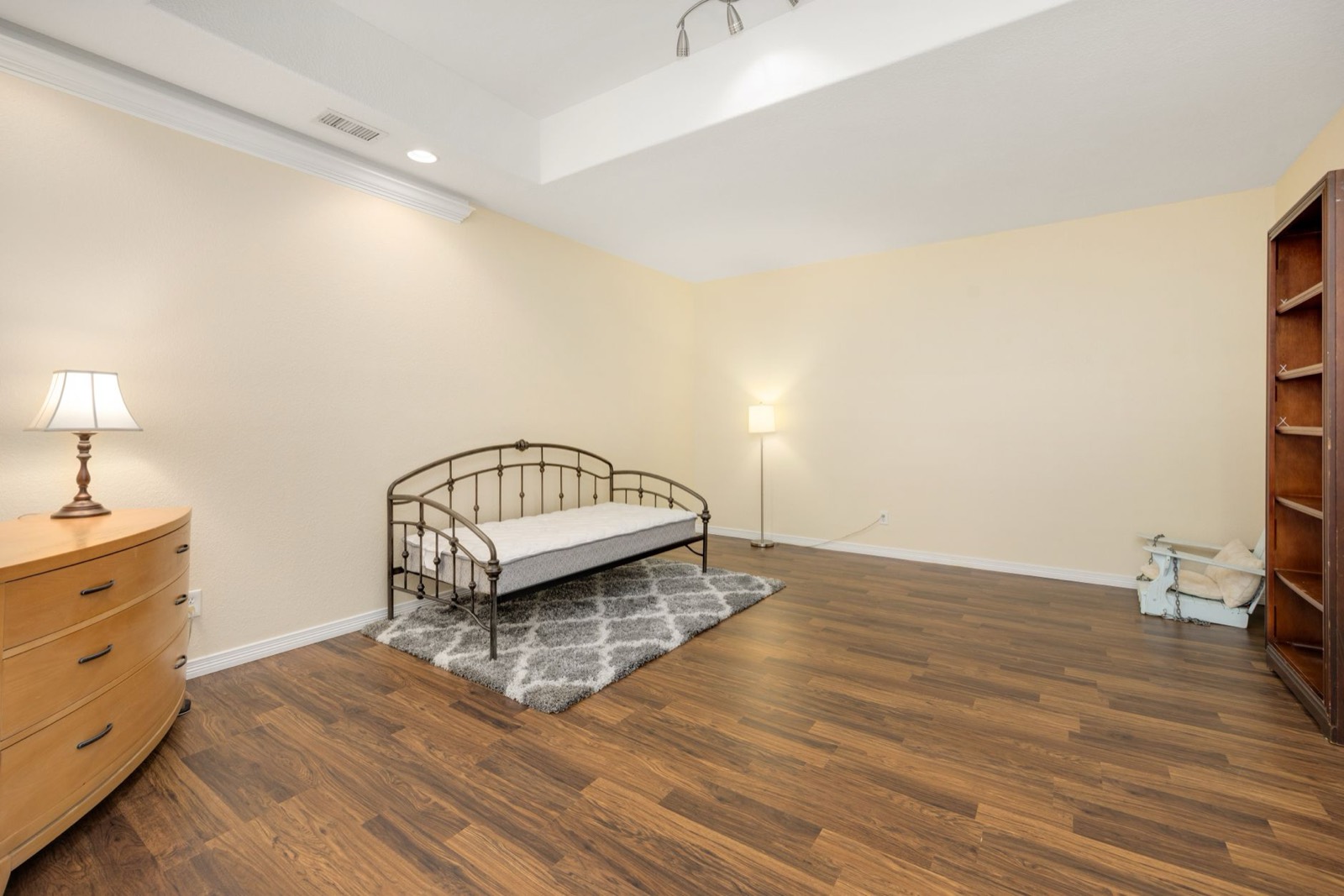
    Mattress and foundation display in a furniture showroom where shoppers can compare support options in person

    Frequently Asked Questions

    Does a bunkie board go under or over the mattress?

    Under. It sits directly on the slats or frame, and the mattress rests on top of it. Nothing goes between the board and the mattress.

    Can I use a bunkie board instead of a box spring?

    Yes, provided your frame already sits at the height you want. A bunkie board replaces the support function of a box spring but not the height. Swapping a 9-inch box spring for a 2-inch board drops your bed by roughly seven inches.

    Will a bunkie board make my mattress sleep hotter?

    Slightly, in some cases. A solid panel restricts airflow that slats would allow. If you sleep hot and run a foam mattress, look for a slatted-style bunkie board rather than a fully solid one.

    Can I just use a sheet of plywood instead?

    It will work mechanically, but raw plywood has rough edges that abrade the mattress cover, is heavier to manoeuvre, and can void some warranties. A finished bunkie board is inexpensive enough that the shortcut rarely pays off.

    Do bunk beds always need one?

    Almost always. Bunk frames have no clearance for a foundation, and the thin mattresses used on them need a flat base underneath. This is the original use the product was designed for.

    Daybed with trundle that commonly uses a thin bunkie board for mattress support

    Choosing the Right Support in Person

    Support is easier to judge in person. Press on a display board, feel the difference between a rigid panel and a flexing slat base, and you will know which one your mattress needs.

    Our showroom carries bunkie boards in every standard size alongside the mattresses and foundations we stock in Newport News. If you are outfitting a child’s room, our kids furniture and bunk bed range pairs directly with twin and full boards, and our bedroom furniture collection covers frames in every size listed above.

    Watch the clearance and specials page for discounted mattress sets, ask about furniture financing with no credit needed options, and check the free home delivery service on eligible items if you would rather not fit a queen board into your car.

    Not sure what your frame needs? Contact our Newport News showroom with your bed’s make and slat spacing and we will tell you honestly whether you need a board at all.