
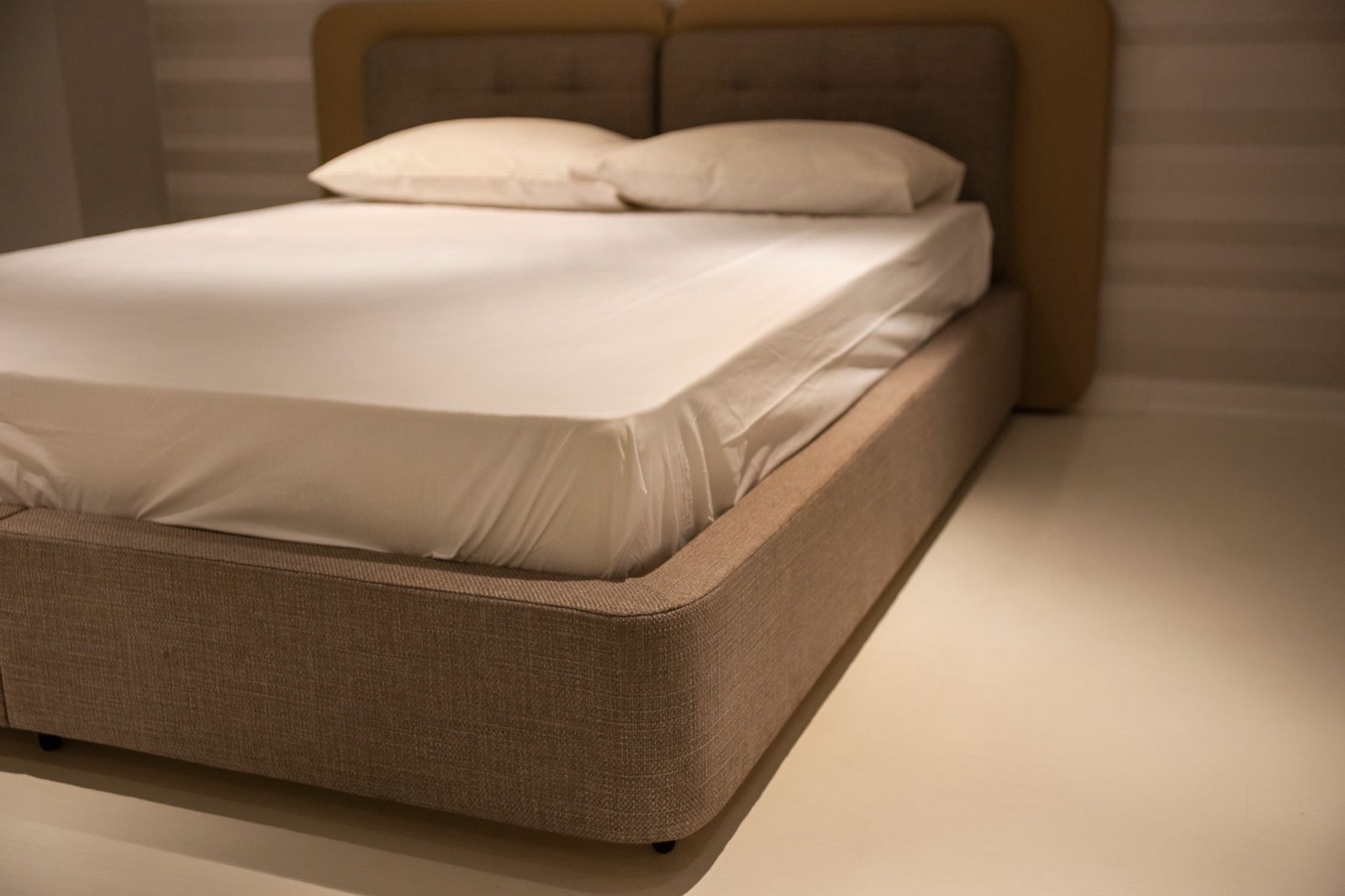
Three mattress types dominate almost every showroom floor: memory foam, innerspring, and hybrid. Each one genuinely suits a different sleeper.
The trouble is that marketing describes all three as the most supportive, coolest and most comfortable option available. They cannot all be right.
Here is what actually separates them, and how to match one to the way you sleep rather than to the way it is advertised.
The Three Types Side by Side
| Memory foam | Innerspring | Hybrid | |
|---|---|---|---|
| Construction | Solid foam layers | Steel coils with thin padding | Coil base plus foam comfort layers |
| Feel | Sinks in and contours | Firm with noticeable bounce | Cushioned on top, supportive underneath |
| Pressure relief | Excellent | Limited | Very good |
| Motion isolation | Best available | Poor — you feel your partner move | Good, but not foam-level |
| Sleeps cool? | Warmest — foam traps heat | Cool — air moves through coils | Cool — coils ventilate |
| Edge support | Weakest | Good | Best |
| Typical price | Mid | Lowest | Highest |
Read that table by column and a pattern appears. Innerspring wins on price and airflow, memory foam wins on pressure relief and stillness, and hybrid trades a little of each to avoid any serious weakness.

Match the Mattress to Your Sleep Position
Sleep position determines where your body needs to sink and where it needs holding up. It is the single most useful starting point.
| You sleep mostly on your… | Firmness to look for | Best type | Why |
|---|---|---|---|
| Side | Medium-soft to medium (4–6 / 10) | Memory foam or hybrid | Shoulders and hips must sink or the spine bends |
| Back | Medium-firm (6–7 / 10) | Hybrid or innerspring | The lower back needs filling in, not sinking |
| Front | Firm (7–8 / 10) | Innerspring or firm hybrid | A soft surface lets the hips drop and arches the back |
| Combination | Medium (5–6 / 10) | Hybrid | Bounce makes changing position easier than deep foam |
Body weight shifts these numbers. Heavier sleepers generally want one step firmer than the table suggests; lighter sleepers one step softer, because they do not compress the comfort layer as much.
Choosing by Your Biggest Complaint
Most people are not shopping in the abstract. They are solving a specific problem.
| Your main issue | Best choice | What to avoid |
|---|---|---|
| “I overheat at night” | Innerspring or hybrid | Dense all-foam without cooling layers |
| “My partner wakes me up” | Memory foam | Traditional innerspring |
| “My hips and shoulders ache” | Memory foam or soft hybrid | Firm innerspring |
| “My lower back hurts” | Medium-firm hybrid | Anything very soft |
| “I need to keep costs down” | Innerspring | Premium hybrids |
| “I sit on the edge of the bed” | Hybrid | All-foam — edges collapse |
| “We’re different weights” | Hybrid with zoned coils | Soft all-foam |

Understanding the Firmness Scale
Firmness is rated one to ten across the industry, but manufacturers apply it loosely. Use it as a guide, not a specification.
| Rating | Description | Typically suits |
|---|---|---|
| 3–4 | Soft — deep contouring | Lightweight side sleepers |
| 5–6 | Medium — the most popular range | Side and combination sleepers |
| 6–7 | Medium-firm | Back sleepers; most couples |
| 8–9 | Firm — minimal sink | Front sleepers; heavier sleepers |
A “medium-firm” from one brand can feel like another brand’s “medium”. This is exactly why lying on the mattress beats reading the label.
What About Durability?
- Innerspring — typically the shortest life; coils lose tension and sag where you sleep most
- Memory foam — good lifespan, but softens gradually and can develop body impressions
- Hybrid — generally the longest-lasting, as the coil unit carries the load rather than the foam
Support underneath matters more than most shoppers expect. Any of these types will fail early on a sagging base, which is why manufacturers specify the foundation in the warranty.
All-foam mattresses in particular need a solid, continuous surface — our guide to whether your bed needs a bunkie board explains the slat-gap test that decides it.
Reading the warranty before you buy
Mattress warranties sound generous at ten or twenty years, but they cover manufacturing defects rather than normal softening.
The clause that matters is the sagging threshold. Most warranties only pay out once an unweighted impression exceeds a stated depth, commonly around an inch and a half. Anything shallower counts as ordinary wear, however uncomfortable it feels.
Two other conditions catch people out regularly: the base must meet the manufacturer’s specification, and removing the law tag can void the claim entirely. Photograph the tag and keep your receipt somewhere you will actually find it in five years.

How to Test One Properly in a Store
- Lie in your actual sleeping position, not on your back out of politeness.
- Stay there at least ten minutes — first impressions of firmness are usually wrong.
- Slide a hand into the small of your back. A large gap means too firm; no gap and sinking means too soft.
- Roll over twice. If it takes effort, the mattress is too soft for a combination sleeper.
- Sit on the edge to check whether it holds or collapses.
- If you share a bed, test it together — motion transfer only shows up with two people.
Sleep quality has measurable effects on health, and the National Heart, Lung, and Blood Institute’s research on sleep deprivation is a useful reminder that this is not just a comfort purchase.
Frequently Asked Questions
Which mattress type lasts the longest?
Hybrids generally last longest, because the coil unit carries the structural load and the foam is only a comfort layer. Traditional innersprings usually wear out first.
Do memory foam mattresses really sleep hot?
Dense traditional foam does trap heat. Modern gel-infused and open-cell foams reduce it considerably, but if running hot is your main complaint, a hybrid’s coil layer moves air far more effectively.
Is a hybrid worth the extra cost?
If you sleep hot, share the bed with someone of a different weight, or sit on the edge regularly, yes. If you sleep alone, cool and still, a good memory foam or innerspring will serve you just as well for less.
What firmness is best for back pain?
Medium-firm, around 6 to 7 out of 10, suits most people with lower back pain. Very soft mattresses let the hips drop out of alignment; very firm ones leave the lumbar curve unsupported.
How long should a mattress last?
Roughly seven to ten years for most types, assuming adequate support underneath. Visible sagging, waking up stiff, or sleeping better away from home are the usual signs it is time.
Compare Them in Person
No amount of specification reading substitutes for ten minutes lying down. The difference between foam and hybrid is obvious within seconds of trying both back to back.
All three constructions are on the floor at our mattress showroom in Newport News, including Serta and Corsicana ranges — see the full list of mattress and furniture brands we carry.
Before you settle on a model, check you have the right size using our mattress size chart from twin to California king, and browse bedroom furniture and bed frames to see the complete setup.
Watch clearance and specials for discounted mattress sets, spread the cost with our no-credit furniture financing options in Virginia, and use the free home delivery service rather than folding a hybrid into a car.
Not sure which type suits how you sleep? Tell our Newport News team your sleep position and main complaint and we will point you at the right two or three to try.