
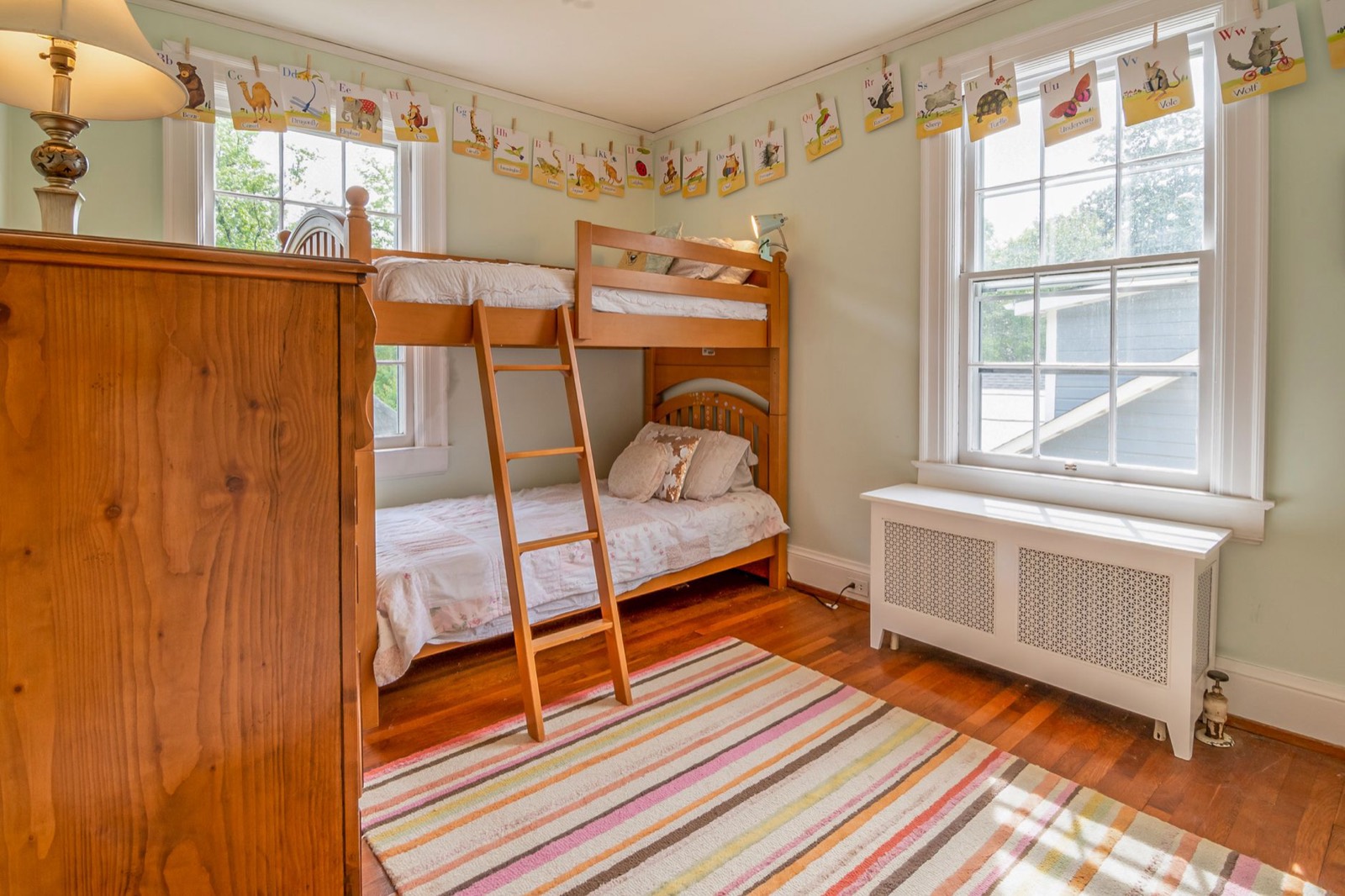
Bunk beds solve a genuine problem: two children, one room, not enough floor. They are also the one piece of children’s furniture with real safety rules attached.
Most of those rules come down to two numbers — guardrail height and mattress thickness — and they are connected in a way that catches a lot of parents out.
Here is how to choose a bunk bed that fits the room, suits your children’s ages, and stays safe once the mattresses are on it.
The Main Bunk Bed Configurations
| Type | Sleeps | Floor space used | Best for |
|---|---|---|---|
| Twin over twin | 2 | Smallest — one twin footprint | The default choice for shared kids’ rooms |
| Twin over full | 2–3 | One full footprint | Siblings of different ages; sleepovers |
| Loft bed | 1 | One twin footprint | Single child needing a desk or storage underneath |
| L-shaped bunk | 2 | Wider, uses a corner | Square rooms with a spare corner |
| Bunk with trundle | 3 | One twin footprint when closed | Occasional guests without a permanent third bed |
Twin over full is the quietly sensible option when children are several years apart. The younger child takes the lower full bunk, which stays useful long after they have outgrown bunk beds entirely.

The Safety Rules That Actually Matter
Bunk beds sold in the US are governed by federal regulation 16 CFR Part 1513 and the voluntary standard ASTM F1427. Both address the same handful of hazards.
| Requirement | The rule | Why it exists |
|---|---|---|
| Guardrails | Required on both sides of the upper bunk, including the wall side | Children roll into the wall gap and become trapped |
| Guardrail height | Must sit at least 5 in above the top of the mattress | Below this a sleeping child can roll over it |
| Gap size | No opening larger than 3.5 in anywhere in the structure | A child’s body can pass through a larger gap; the head cannot |
| Ladder | Securely fixed, not hooked on | Detachable ladders shift under weight |
| Age warning | No child under 6 on the upper bunk | Federally mandated labelling on every bunk bed sold |
The under-six rule is not a manufacturer’s suggestion. It is a required warning label, and it reflects a genuine developmental threshold in how children wake and move at night.
The American Academy of Pediatrics’ home safety guidance is a reliable reference for age-appropriate sleeping arrangements more broadly.
Mattress Thickness: The Mistake Almost Everyone Makes
This is the single most important thing on this page.
Guardrail height is measured from the top of the mattress, not from the bed frame. Fit a thicker mattress than the frame was designed for and you reduce the effective guardrail by exactly that difference.
| Mattress thickness on top bunk | Effective guardrail height | Verdict |
|---|---|---|
| 6 in (frame designed for 6 in) | Full 5 in of rail above the mattress | ✅ As intended |
| 8 in on a 6 in frame | Reduced by 2 in | ⚠️ Marginal — check the rail |
| 12 in on an 8 in frame | Reduced by 4 in | ❌ Unsafe — rail is largely defeated |
Most bunk frames specify a maximum of 6 inches on the top bunk, with some allowing up to 8. Many manufacturers print a “do not exceed” line directly on the side rail — check for it before buying a mattress.
The lower bunk has no such restriction, so a thicker, more comfortable mattress is perfectly fine down there.
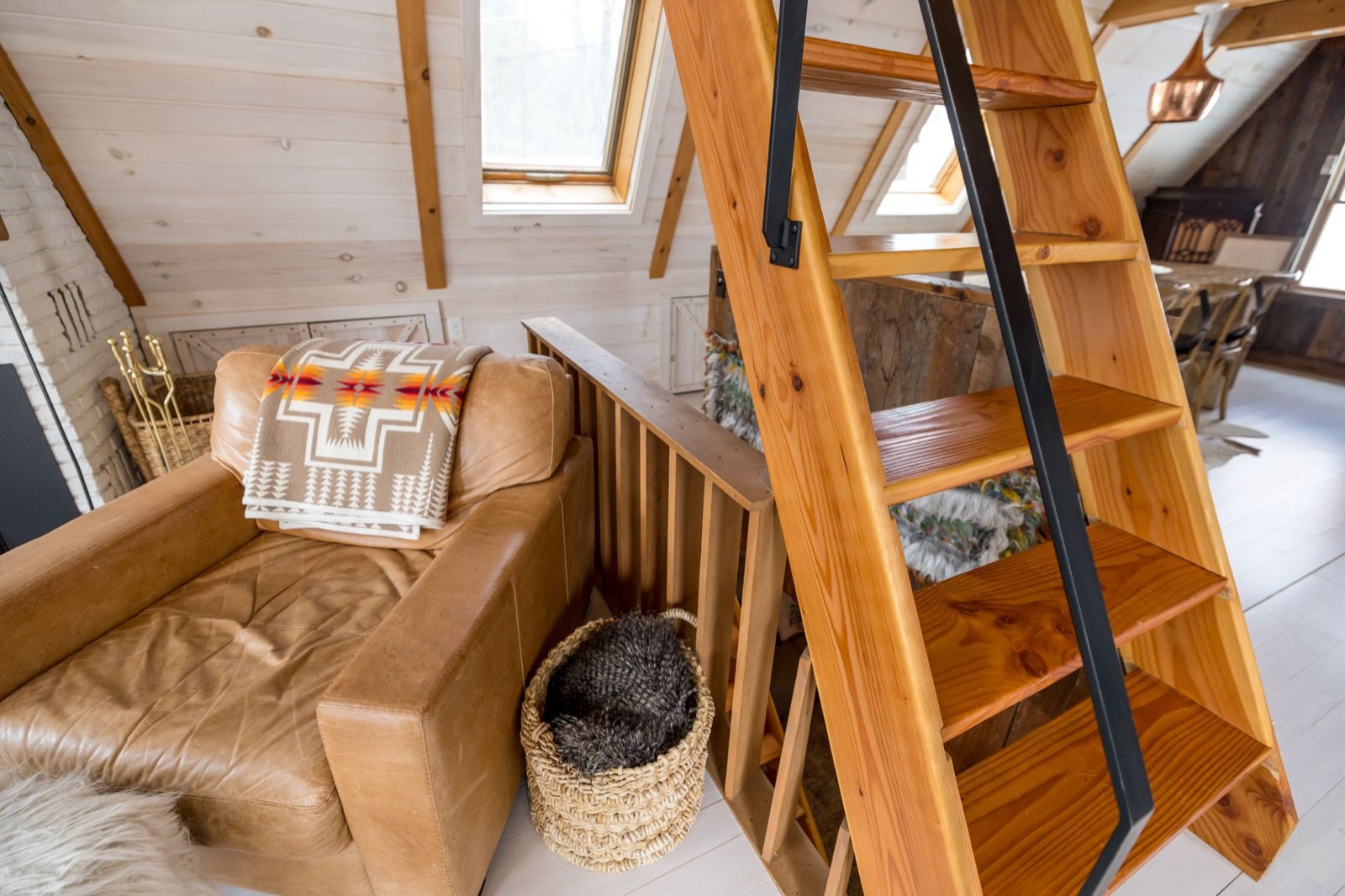
Will It Fit the Room?
Bunk beds fail on ceiling height far more often than on floor space.
- Allow at least 30 inches between the top mattress surface and the ceiling so a child can sit up
- Standard bunks run roughly 60 to 70 inches tall; an 8-foot ceiling is comfortable
- Check for ceiling fans, sloped ceilings and light fittings above the bed position
- Leave clearance for the ladder to be climbed, not just to exist
- Measure the doorway, stair turn and landing — bunk rails are long and rigid
Twin bunks are built to standard twin dimensions of 38 by 75 inches. If you are unsure what that means for the rest of the room, our mattress size chart with minimum room dimensions covers every standard size.
Support Under the Mattresses
Bunk beds have no room for a box spring — that constraint is precisely why the bunkie board was invented.
Most bunk frames use slats, and if those slats sit more than about three inches apart a thin mattress will sag between them within months. A one-inch bunkie board fixes it without eating into your guardrail height.
Our guide to what a bunkie board is and when your bed needs one includes the slat-gap test and full sizing.
Setting It Up Safely
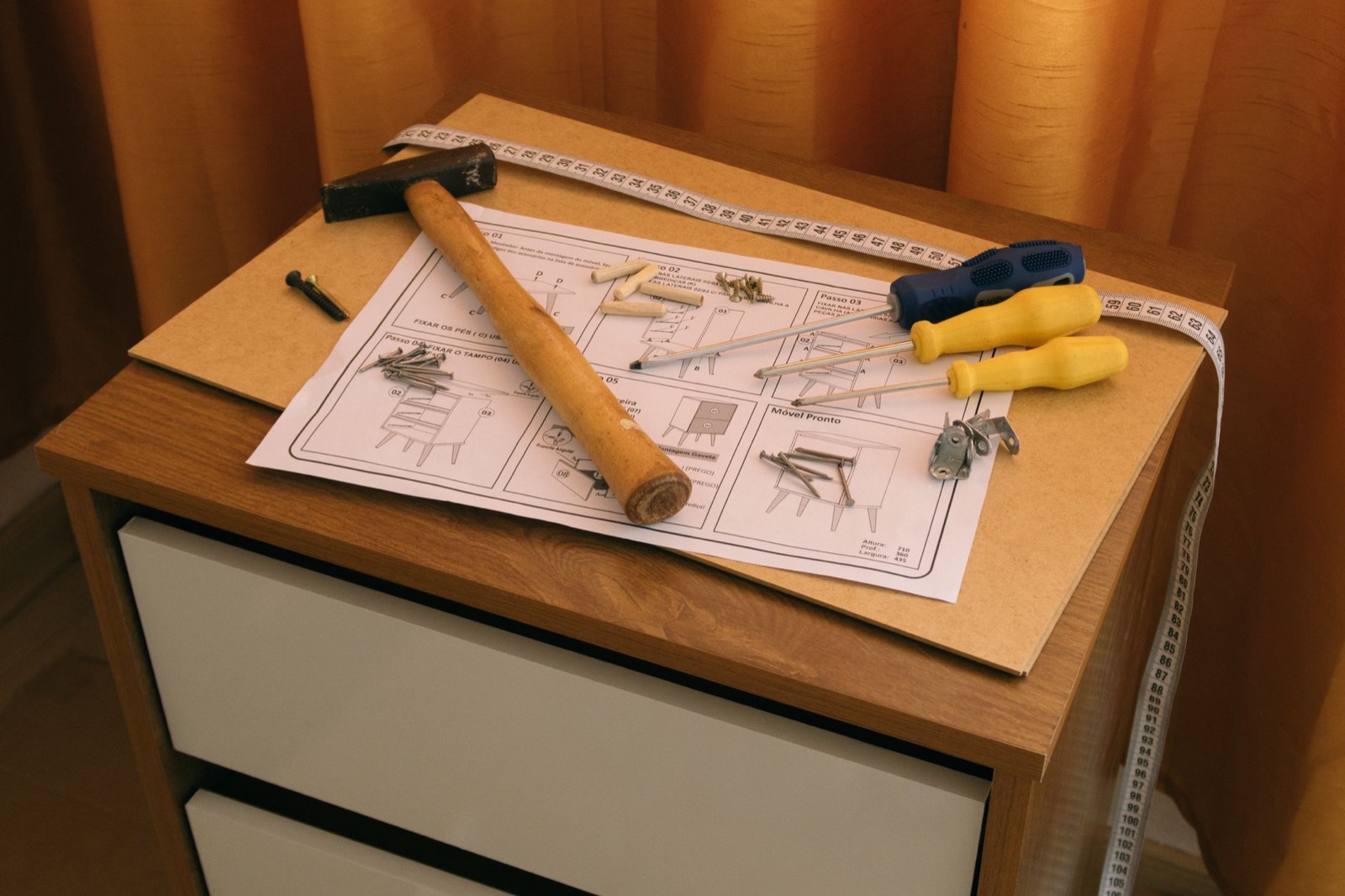
- Assemble on a level floor and tighten every fixing fully.
- Anchor the frame to the wall if the manufacturer supplies brackets.
- Fit both guardrails on the top bunk, even the one against the wall.
- Check that no gap anywhere exceeds 3.5 inches once assembled.
- Position away from ceiling fans, light fittings and window blind cords.
- Re-tighten all bolts after the first month, then twice a year.
That last step matters more than it sounds. Children move a great deal on a bunk bed, and fixings work loose gradually rather than suddenly.
Frequently Asked Questions
What age can a child sleep on the top bunk?
Six is the federally mandated minimum printed on every bunk bed sold in the US. Many parents wait until eight or nine, particularly for children who are restless sleepers or who wake and move about at night.
How thick can a bunk bed mattress be?
Six inches on the top bunk in most cases, occasionally up to eight. The guardrail must still sit at least five inches above the mattress surface, so exceeding the stated maximum directly reduces the protection it offers.
Do I need guardrails on the wall side?
Yes. It is a requirement, not an option. Children roll into the gap between the mattress and the wall, and that gap is one of the most serious entrapment hazards on a bunk bed.
How much ceiling height does a bunk bed need?
Allow around 30 inches between the top mattress and the ceiling so a child can sit up without ducking. A standard 8-foot ceiling accommodates almost every bunk on the market.
Can bunk beds be separated into two beds?
Many twin-over-twin models can, and it is worth confirming before you buy. It effectively doubles the useful life of the purchase once children outgrow bunking.

See the Frames in Person
Guardrail height, ladder angle and how solid a frame feels when you push it are all things a photograph cannot convey. Ten minutes in a showroom answers them all.
Our kids furniture and bunk bed range in Newport News covers twin over twin, twin over full and loft configurations, with matching bedroom furniture and storage to complete the room.
For the mattresses themselves, our mattress selection includes bunk-appropriate thin profiles, and it is worth reading how memory foam, innerspring and hybrid constructions compare before choosing for a child’s bed.
Check current kids furniture deals and clearance and specials, spread the cost through our no-credit furniture financing options, and let our free home delivery service handle a frame that will not fit in a car.
Unsure whether a bunk suits your ceiling or your children’s ages? Ask our Newport News team — we would rather talk you out of the wrong frame than sell you one.